


240111034030.jpg)

240228010746.jpg)
Zarzi was used by groups of hunter-gatherers between 18,000 and 14,000 years ago.
The cave here at Zarzi was used by groups of hunter-gatherers between 18,000 and 14,000 years ago.
Early Communities
The cave here at Zarzi was used by groups of hunter-gatherers between 18,000 and 14,000 years ago. Zarzi Cave was excavated by Dorothy Garrod in 1928 and by Iraqi archaeologist Ghanim Wahida in 1971.
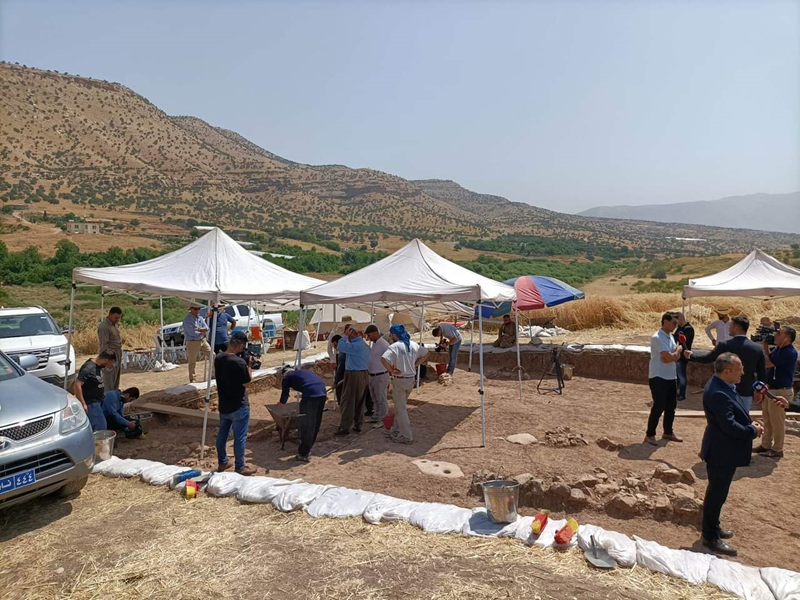
After the cave was abandoned at the end of the last Ice Age, communities in this valley built stone buildings at Zawi Chemi Razan and used large grinding stones used for preparing food. The site was discovered during a survey in 2013 and excavated from 2022 by the University of Reading in collaboration with Sulaimani Directorate of Antiquities and Heritage.
The people who sheltered inside Zarzi Cave ate wild sheep, goat, gazelle, tortoise and fish. As today, the valley is rich in plant and animal wildlife, attracted by the abundant fresh water of the Chemi Razan River.
To preserve these rich water supplies, farmlands and wildlife, we need to protect them from climate change, pollution and other threats.

